Acupuncture and Moxibustion for Breech Presentation During Pregnancy
During the later stages of pregnancy, most babies naturally move into a head-down position in preparation for birth. However, some babies remain in a breech position, with the bottom or feet facing downward.
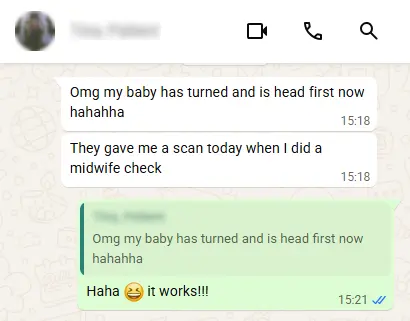
Recently, I treated two pregnant women whose babies were still in breech position. One was 33.5 weeks pregnant and the other was 35 weeks pregnant.
After just one treatment, both mothers later contacted me to say that their babies had moved into a head-down position.

A Traditional Chinese Medicine Perspective
In Traditional Chinese Medicine (TCM), pregnancy is closely connected with the healthy circulation of Qi and Blood and the body's ability to maintain balance throughout the different stages of pregnancy.
When a baby remains breech, treatment is not about physically forcing the baby to turn. Instead, the traditional approach is to support the mother's overall balance, encourage healthy circulation and create favourable conditions for the baby to move naturally.
Acupuncture and moxibustion have a long history of use in Chinese medicine for breech presentation. Moxibustion is a gentle warming therapy using the herb mugwort. The warmth is traditionally used to stimulate the body's Qi and encourage movement and circulation.
In breech pregnancy treatment, acupuncture and moxibustion are used with the aim of encouraging fetal activity and supporting the natural process by which the baby may move into a head-down position.

What Does the Research Show?
One of the best-known studies was a randomised controlled clinical trial published in JAMA in 1998, involving women whose babies were breech during the 33rd week of pregnancy.
The study involved 260 first-time mothers, with 130 women receiving TCM treatment and 130 receiving routine care.
| Stage | TCM Treatment Group | Routine Care Group |
|---|---|---|
| Week 33 - Start of study | 130 breech pregnancies | 130 breech pregnancies |
| Treatment period | Moxibustion for 7 days, with a further 7 days if still breech | - |
| Week 35 - Baby head-down | 75.4% 58% improvement |
47.7% |
| External Cephalic Version after week 35 | 1 woman | 24 women |
| Baby head-down at birth | 75.4% 21% improvement ECV contributed no further improvement over TCM treatment |
62.3% |
The researchers recorded significantly more fetal movement in the treatment group.
After week 35, women whose babies remained breech could undergo External Cephalic Version (ECV) - a medical procedure in which a clinician attempts to turn the baby manually from outside the abdomen. ECV was performed in only 1 woman in the moxibustion group compared with 24 women in the routine-care group.
At birth, 75.4% of babies in the TCM group were head-down compared with 62.3% in the routine-care group.
The study concluded that TCM treatment beginning at 33 weeks was associated with increased fetal activity and a higher rate of cephalic, or head-down, presentation.
When Is the Best Time for Treatment?
Timing is important.
The JAMA study began treatment during the 33rd week of pregnancy, with treatment continuing for one to two weeks.
This makes approximately 33–35 weeks a particularly useful window to consider treatment when a baby remains breech.
At this stage, there is generally still enough space for the baby to move relatively freely, while the pregnancy is advanced enough that a persistent breech position is becoming more relevant in planning for birth.
Treatment may still be considered later in pregnancy depending on individual circumstances, but as the pregnancy progresses there is progressively less room for the baby to turn.
For this reason, if your baby remains breech at around 33–35 weeks, it can be worth discussing acupuncture and moxibustion rather than waiting until the final weeks of pregnancy.
These are individual clinical experiences and cannot establish that treatment alone caused the babies to turn, as babies can also turn spontaneously during this stage of pregnancy. However, both cases occurred within the 33–35 week treatment window investigated in clinical research on moxibustion for breech presentation.
For me as a practitioner, it was wonderful to receive both messages from the mothers and to see them able to continue preparing for birth with their babies in a more favourable position.
Supporting the Final Weeks of Pregnancy
Acupuncture and moxibustion can form part of a broader approach to supporting women through the final weeks of pregnancy.
Treatment is tailored to each mother, her stage of pregnancy and her overall health. Breech presentation should also continue to be monitored by the mother's midwife, obstetrician or maternity care provider.
If your baby is still breech at around 33–35 weeks, this can be a good time to discuss whether acupuncture and moxibustion may be appropriate as an additional supportive treatment.
Research reference:
Cardini F, Weixin H. Moxibustion for Correction of Breech Presentation: A Randomized Controlled Trial. JAMA. 1998;280(18):1580–1584. doi:10.1001/jama.280.18.1580.